The story behind
byACRE’s newest
design object
At byACRE, we’re known for rethinking what mobility looks like. From the very beginning, our mission has been to break down the stigma around reduced mobility and help people live active lives without compromise. That mission is not just about rollators: it’s about changing how the world sees and uses design.
Dorica is the next step in that journey.
From mobility devices to universal design

We’ve spent years redefining what mobility looks like through our rollators. Dorica is a natural continuation of that mindset: but it takes the idea one step further.
It’s no longer just about improving mobility.
It’s about creating design that belongs to everyone.
That’s the essence of universal design: considering the widest range of users from the very beginning, so the result isn’t exclusive or specialized.
Dorica was created with that same spirit:
a design that works for anyone, and feels naturally at home – no matter who’s using it, or why.
The question that started it all
The idea for Dorica began three years ago at the world’s largest trade fair for rehabilitation and care, Rehacare, in Germany. Our team was showcasing byACRE’s lightweight rollators, right beside a booth selling plain, white shower chairs. Practical, yes, but also stigmatising.
We couldn’t stop asking ourselves:
“How could we redesign the shower chair, an object full of stigma, into something people would be proud to have in their homes?”
When we started researching, we found that shower chairs are one of the most common assistive products people own. But they’re rarely talked about. They’re often pushed out of sight, labeled for a single person, and designed to be hidden away.
To us, it was clear: the product wasn’t the problem – the stigma was.
A new approach to an old idea
So, we set out to create something completely different: a product that could live anywhere in the home, be used by anyone, and feel like a natural part of daily life.
Dorica had to be functional, but also beautiful, light, and joyful to use. It had to challenge everything a shower chair represents. Every curve, surface, and choice of material had to support both function and feeling.
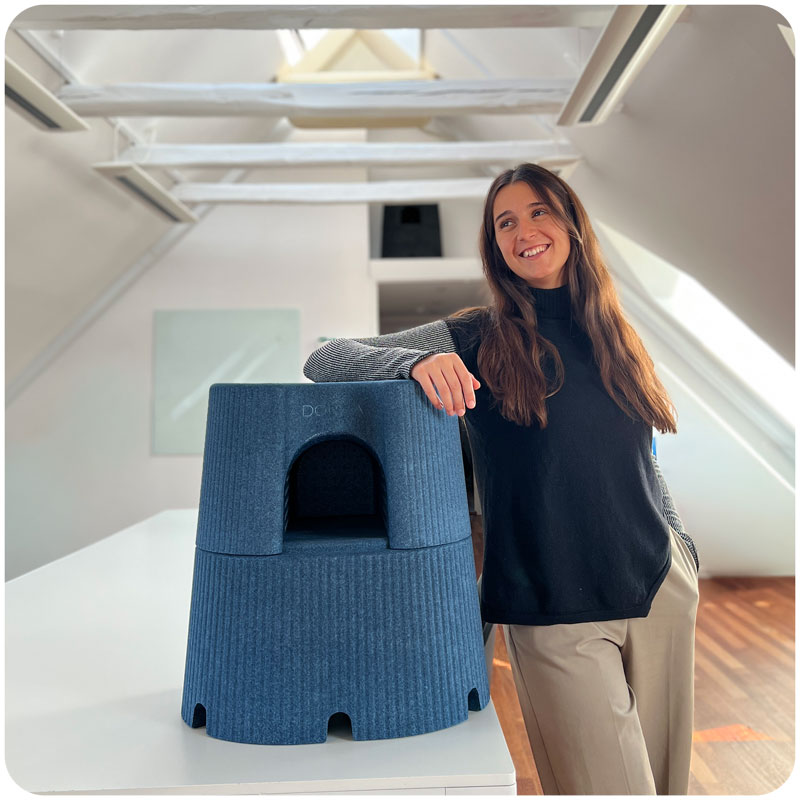
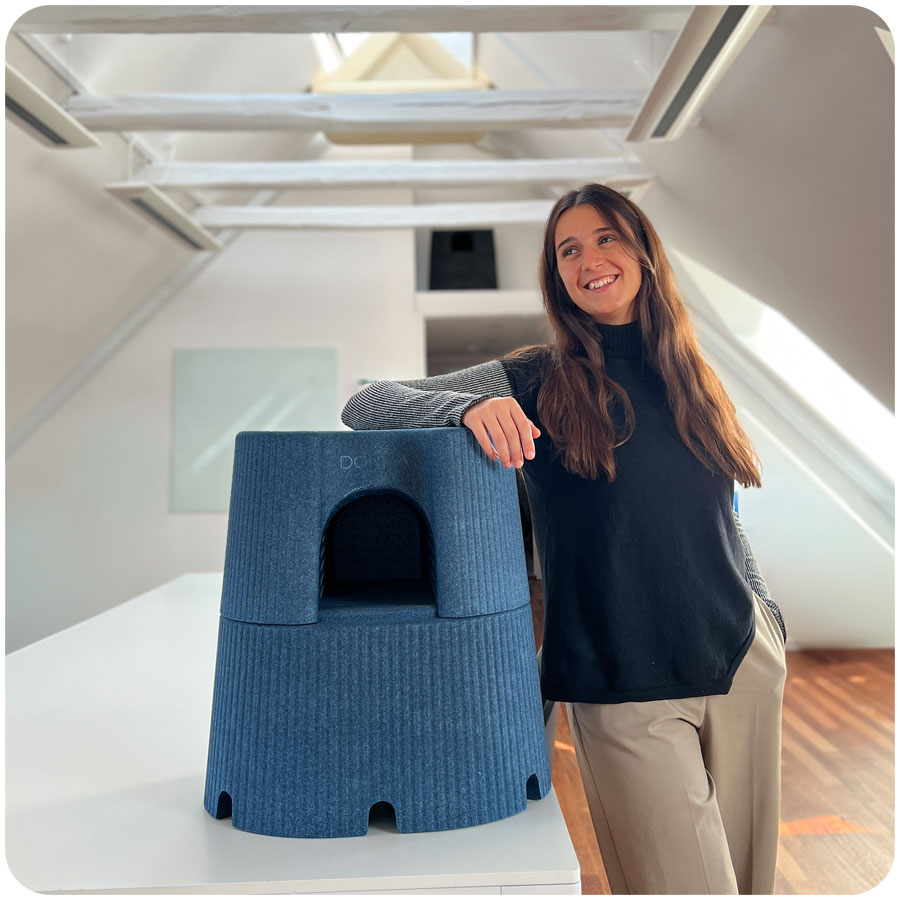
Carmen was our engineer and art director for the project. Together with her team, they studied the organic forms of byACRE’s rollators, shapes that communicate motion and lightness, and combined them with the timeless geometry of the Doric column.
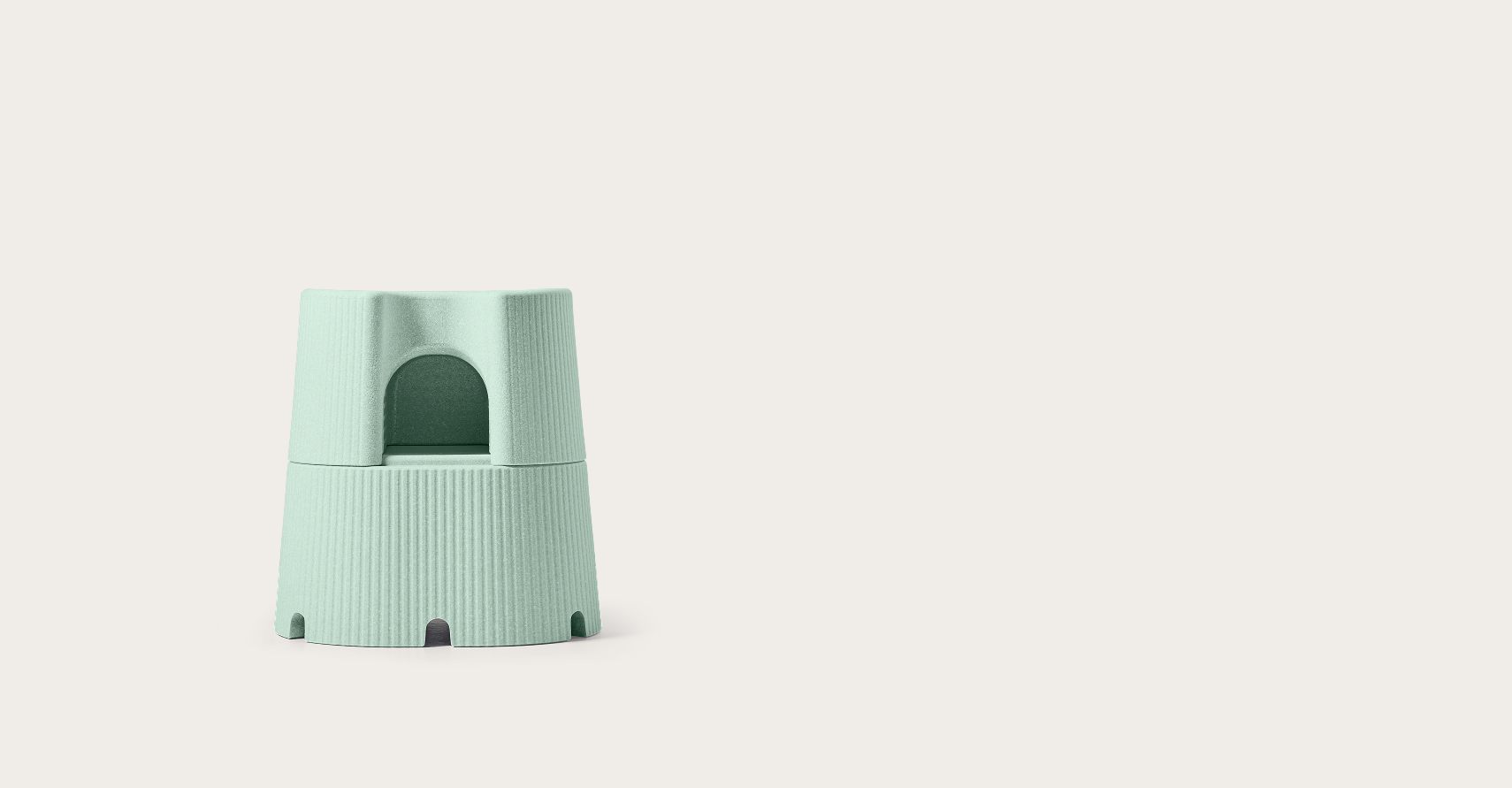
The result was a simple, stable form that feels solid yet soft: something you want to keep within reach.
“We wanted Dorica to be something that invites touch: soft, light, and strong.
When we started sketching, we looked to architecture for inspiration, especially the Doric columns of ancient Greece. Their strength, balance, and simplicity felt like the perfect metaphor for what we wanted Dorica to be”.
– Carmen, Product Engineer & Art Director, byACRE

Designed from material to meaning
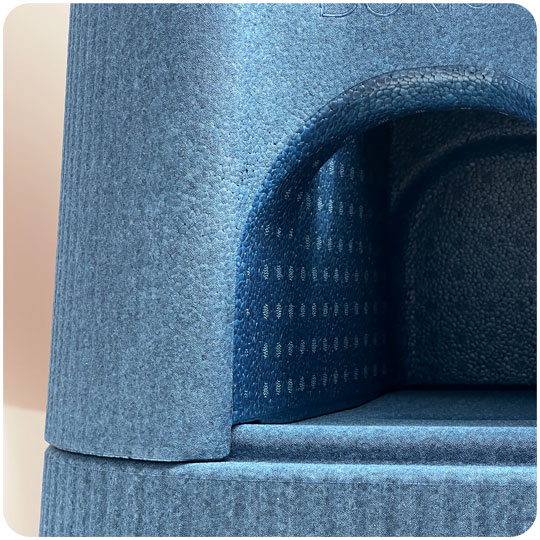

Dorica is made from expanded polypropylene (EPP), the same lightweight, durable material used in our Nordic Pioneer rollator. EPP is non-slip, easy to clean, and resistant to moisture, making it ideal for humid environments like bathrooms, but also surprisingly tactile and soft to the touch.
The choice of EPP wasn’t just about performance: it was about feel. Carmen describes it as “a material that feels warm and comfortable”. It makes Dorica stable and strong, but also light enough to carry in one hand.
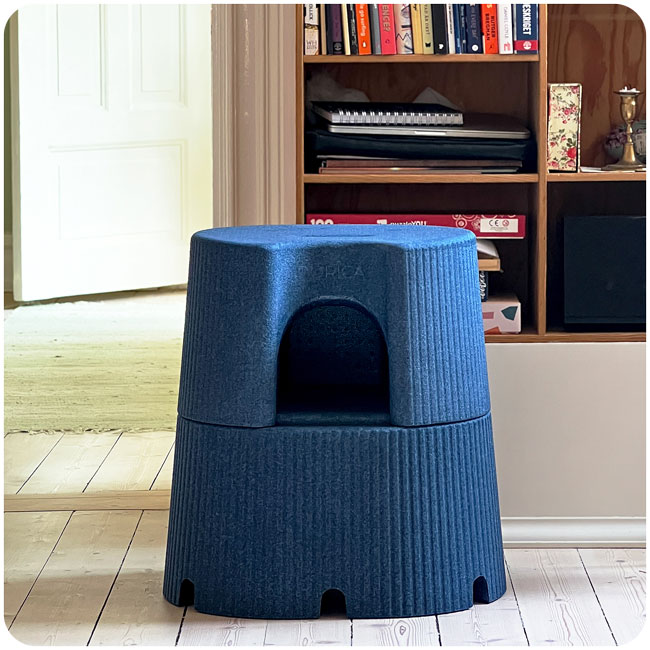
The design offers three height levels, so Dorica can be used as a stool, seat, or step-up. Its modular structure means it can be separated into two pieces or nest together as one, making it easy to store or move between rooms. The curved arcs at the bottom allow water to drain naturally, so it stays clean and dry without needing effort.
In short: every detail has a reason, and every reason connects to how people live.
A universal object for every home
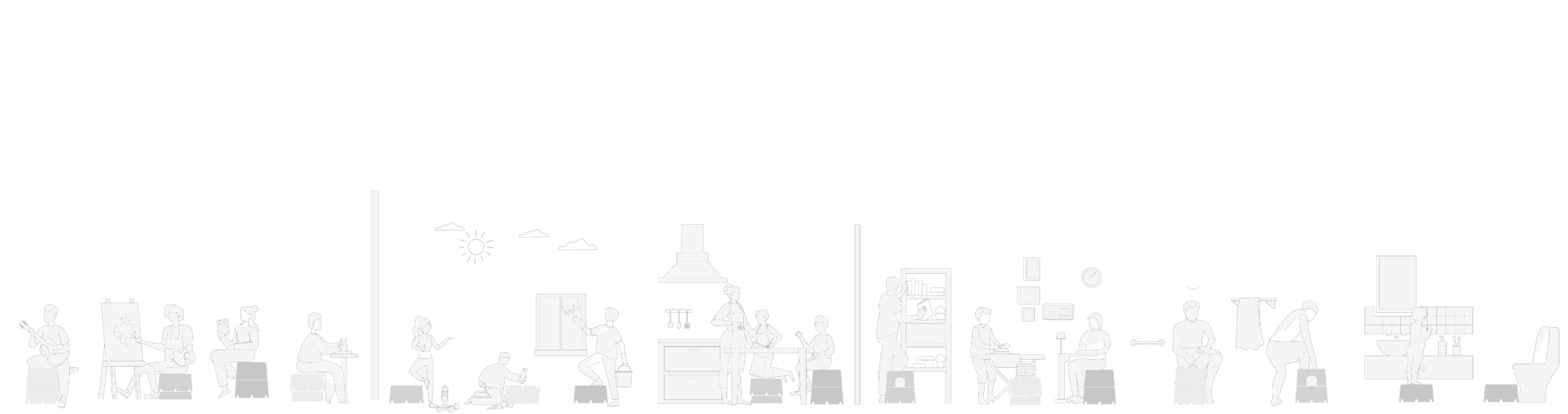
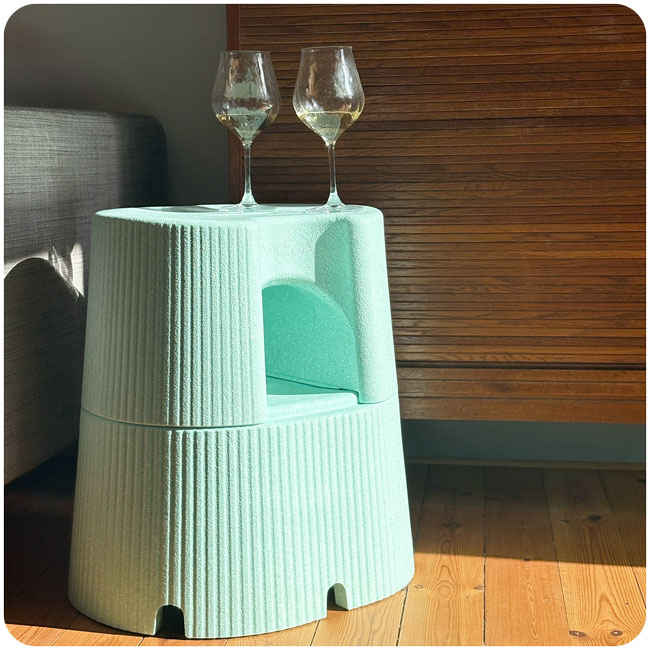
Dorica can live in any room, for anyone. It might be a shower seat one day, a side table the next, or a footrest in the evening. That flexibility isn’t an afterthought: it’s the very point. Everyone can use it, though they might use it differently and for different things.
When a design becomes useful to everyone, it no longer carries the weight of being a “special” product for someone with a condition.
It simply becomes good design, shared among people in the household.
The meaning behind the colours
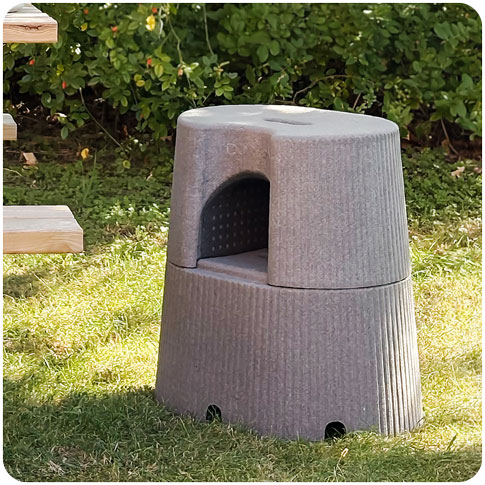
Each Dorica colour was created not just for variety, but for personality. To fit the many moods a home can have. Not for the user, but for the space it lives in.
The process behind
From the first sketches to the final form, Dorica is the result of curiosity, collaboration, and countless iterations.
Watch Carmen share the design journey: how a material, an idea, and a touch of architecture came together to create something timeless.
Why Dorica matters
Dorica represents a shift in how we think about design and dignity. It’s not just a stool or a seat. It’s a new way of thinking about how people, regardless of age or ability, can share the same spaces and objects.
When design stops labelling people, it starts including them. And that’s exactly what Dorica was made to do.